

Printmaking with Plant-based Colour with Jacqui Symons
About the Workshop
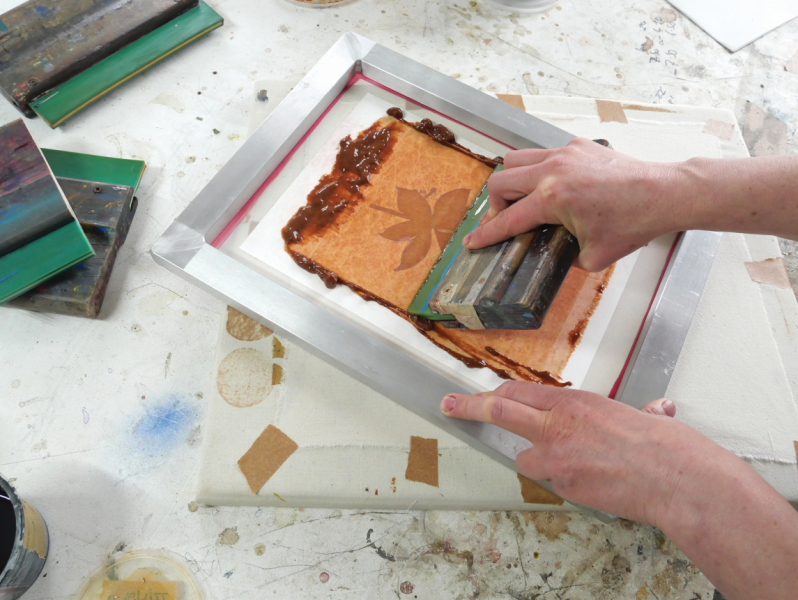
This comprehensive four-day course covers a variety of processes and techniques for printing onto textiles using natural dyes and plant-based colour. Participants will learn how to incorporate natural colour into their work, how to mix and use plastic-free printing pastes for fabrics, which dyes are the most effective, how to modify colour, how to prepare and treat textiles and how to use mordants to achieve a range of tones from a single dye pot.
This practical and intensive course will provide you with the skills to develop and cultivate the use of natural dyes in your printmaking practice. You’ll be provided with the recipes and instructions needed to continue experimenting with plant colour and will finish the course with the knowledge to further your use of this process.
Ideally suited for both natural dyers that would like to learn how to use printing techniques to apply natural colour to textiles and printmakers that would like to replace acrylics and synthetic dyes with natural colour, this is an opportunity to immerse yourself in the technique of using plants to achieve a variety of colour from brilliant primary hues through to the subtle tones and shades of nature.
You don’t need any prior knowledge of working with natural dyes but it’s also fine if you’re an experienced natural dyer. We’ll be concentrating on recipes and techniques to successfully print natural colour on cloth, rather than how to create repeat patterns and designs. Whilst basic screenprinting, block printing and other application techniques will be taught, this course concentrates on achieving good results with natural colour, rather than learning the print techniques specifically. We’ll design and cut stencils for screenprinting rather than exposing designs on screens.
Please note that we will only be using colour from plants, so won’t be using cochineal though the techniques and recipes will be suitable for experimentation with this source of natural colour once the course has finished.
Lunch and materials included
Day One: Introduction to natural dyes, making print pastes for fabric, using stencils and screenprinting onto fabric
Day Two: Layering and resist affects, making mordant pastes
Day Three: Printing with mordants, setting and curing colour
Day Four: Processing mordant prints and dyeing mordant-printed fabric
The Workshop Leader
Created from a desire to be more environmentally-aware, buy and consume fewer products and generate less waste, printmaker Jacqui Symons began exploring natural colour and dyes in 2018. She researched and developed the use of plant-based pigments for oil-based printmaking inks and from there expanded into making her own watercolours, pastels, inks, screenprinting pastes and dry powdered pigments from plant sources.
In 2019, Jacqui trained under Jenny Dean to learn about the use of natural dyes with textiles and yarns, drawing on Jenny’s 40 years of experience in this field to develop further knowledge and understanding of this increasingly relevant and valuable industry.
Jacqui created Slow Lane Studio to provide resources, information, practical advice and workshops focusing on natural dyeing, plant-based pigments and plant-based artist colours. Alongside working on creative projects and commissions, she is developing a pigment garden and a plant pigment library as a reference and resource for other artists.
Ticket options
About the Workshop
This comprehensive four-day course covers a variety of processes and techniques for printing onto textiles using natural dyes and plant-based colour. Participants will learn how to incorporate natural colour into their work, how to mix and use plastic-free printing pastes for fabrics, which dyes are the most effective, how to modify colour, how to prepare and treat textiles and how to use mordants to achieve a range of tones from a single dye pot.
This practical and intensive course will provide you with the skills to develop and cultivate the use of natural dyes in your printmaking practice. You’ll be provided with the recipes and instructions needed to continue experimenting with plant colour and will finish the course with the knowledge to further your use of this process.
Ideally suited for both natural dyers that would like to learn how to use printing techniques to apply natural colour to textiles and printmakers that would like to replace acrylics and synthetic dyes with natural colour, this is an opportunity to immerse yourself in the technique of using plants to achieve a variety of colour from brilliant primary hues through to the subtle tones and shades of nature.
You don’t need any prior knowledge of working with natural dyes but it’s also fine if you’re an experienced natural dyer. We’ll be concentrating on recipes and techniques to successfully print natural colour on cloth, rather than how to create repeat patterns and designs. Whilst basic screenprinting, block printing and other application techniques will be taught, this course concentrates on achieving good results with natural colour, rather than learning the print techniques specifically. We’ll design and cut stencils for screenprinting rather than exposing designs on screens.
Please note that we will only be using colour from plants, so won’t be using cochineal though the techniques and recipes will be suitable for experimentation with this source of natural colour once the course has finished.
Lunch and materials included
Day One: Introduction to natural dyes, making print pastes for fabric, using stencils and screenprinting onto fabric
Day Two: Layering and resist affects, making mordant pastes
Day Three: Printing with mordants, setting and curing colour
Day Four: Processing mordant prints and dyeing mordant-printed fabric
The Workshop Leader
Created from a desire to be more environmentally-aware, buy and consume fewer products and generate less waste, printmaker Jacqui Symons began exploring natural colour and dyes in 2018. She researched and developed the use of plant-based pigments for oil-based printmaking inks and from there expanded into making her own watercolours, pastels, inks, screenprinting pastes and dry powdered pigments from plant sources.
In 2019, Jacqui trained under Jenny Dean to learn about the use of natural dyes with textiles and yarns, drawing on Jenny’s 40 years of experience in this field to develop further knowledge and understanding of this increasingly relevant and valuable industry.
Jacqui created Slow Lane Studio to provide resources, information, practical advice and workshops focusing on natural dyeing, plant-based pigments and plant-based artist colours. Alongside working on creative projects and commissions, she is developing a pigment garden and a plant pigment library as a reference and resource for other artists.
Our payments are processed using : Payyo